Case study · Brand identity
Non-profit · Zero waste
Zero Waste Wiki.
Zero Waste Wiki is a collective online encyclopaedia based on the wiki principle. Its aim: provide freely reusable, objective, verifiable and up-to-date content so that as many people as possible can spread the zero waste approach. Knowledge is only valuable if it is shared.
It began as an educational kit for teachers and youth workers raising awareness among young audiences, and has grown to include DIY workshops and composting fact sheets. Every month, volunteers correct, annotate and add to the wiki.
Key contributions
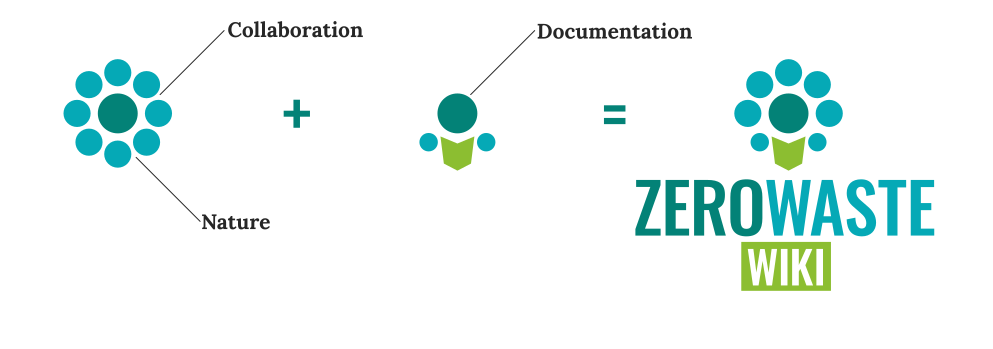
- A logo built from three concepts: nature, collaboration and documentation.
- A green and teal colour palette.
- An animated version of the mark.
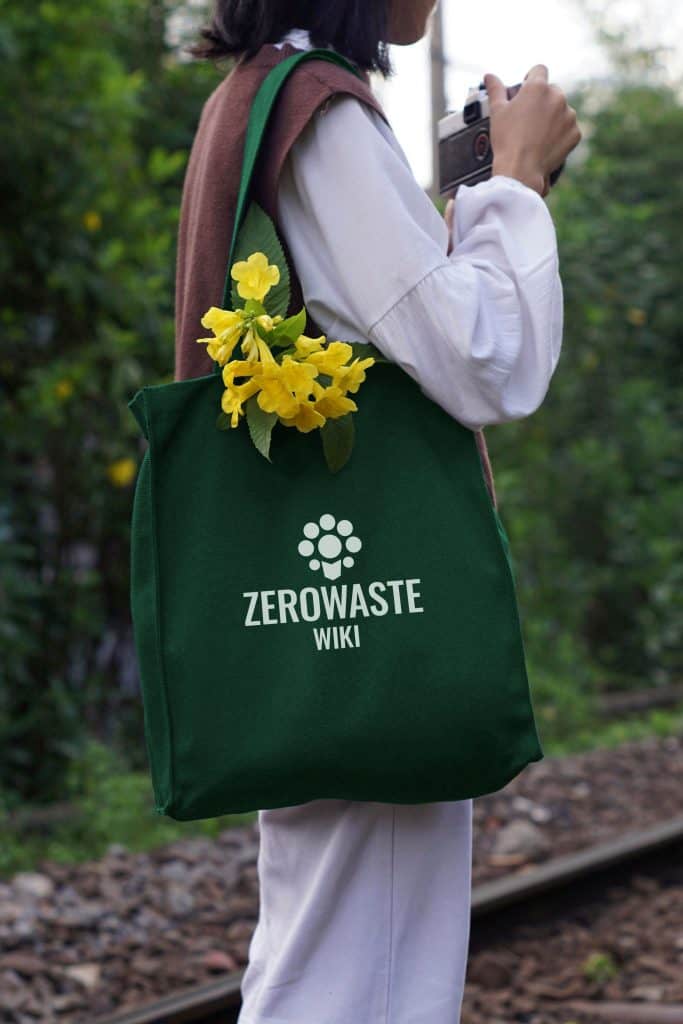
- Applications such as merchandise.
01 — The challenge
Open, organic, community-driven.
A grassroots, volunteer-run encyclopaedia on zero waste living needed an identity that felt open, organic and community-driven – rather than corporate or institutional.
Avoid
Corporate
A polished, top-down look would contradict a project run horizontally by volunteers.
Avoid
Institutional
The wiki is written by its community for everyone – it should feel accessible, not official.
02 — The mark
Three concepts, one symbol.
The logo was constructed from three distinct concepts – nature, collaboration and documentation – each translated into a simple geometric form, then combined into a single cohesive mark. The result carries the project’s values without needing to explain them.
Nature
The ecological purpose of the zero waste movement.
Collaboration
A community of volunteers editing together.
Documentation
An encyclopaedia: knowledge written down and shared.
03 — Values
What the identity stands for.
Several values guided the approach – the same ones that guide the wiki itself.
- i.
Accessibility
For everyone: beginners and experts, teachers and students, association members and citizens.
- ii.
Horizontality
Pages are edited by volunteers from local Zero Waste groups, coordinating within a collaborative, leaderless community.
- iii.
Peer review
Freely accessible content and an active community mean texts are constantly checked and improved – alive rather than closed and frozen.
- iv.
Reliability
Texts rely on authors or local groups who manage their editing; pages outlive their original authors and are reread regularly.
- v.
Open collaboration
Help, resources and solutions that go beyond the interests of any one group or company.
04 — In context
From the wiki to the street.
Online, in workshops and on merchandise: zerowastewiki.org.